Frequently Asked Questions
The most-asked questions about microbial groups and extremophiles.
What exactly are extremophiles?
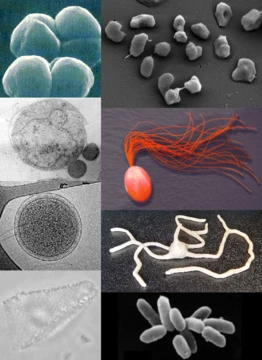
Extremophiles are microorganisms—mostly bacteria and archaea—that thrive in conditions lethal to most life, such as extreme heat, acidity, salinity, or pressure. They are found in hydrothermal vents, salt lakes, deep-sea trenches, and even Antarctic ice.
What are the main microbial groups covered in this encyclopedia?
The encyclopedia spans the three domains of life—Bacteria, Archaea, and Eukarya—with particular focus on archaeal lineages such as Crenarchaeota and Euryarchaeota, plus bacterial groups like Thermotogae and Deinococcales. Many of the most extreme organisms belong to the archaeal domain.
Who are the key figures in extremophile research?
Carl Woese is widely credited with establishing Archaea as a separate domain in the 1970s, while Thomas Brock isolated the first known thermophilic bacterium, Thermus aquaticus, from Yellowstone hot springs in 1966. More recently, researchers like Carl DeLong have expanded our understanding of deep-sea and marine microbial communities.
Where should a newcomer start reading?
Begin with the entry on the three-domain system to understand how archaea, bacteria, and eukaryotes are organized, then move into the extremophile categories section covering thermophiles, halophiles, acidophiles, and so on. The 'Famous Species' page gives quick profiles of iconic organisms like Sulfolobus and Halobacterium.
What counts as 'extreme' in this context?
'Extreme' refers to any environmental parameter pushed beyond the range where typical mesophilic organisms function—temperatures above 80 °C, pH below 2 or above 10, salt concentrations near saturation, pressures exceeding 1,000 atmospheres, or radiation doses that would sterilize ordinary cells.
What is the most famous discovery moment in extremophile history?
The 1977 exploration of hydrothermal vent communities in the Pacific Ocean by Robert Ballard's team overturned the long-held assumption that sunlight was the sole energy source for ecosystems. It revealed entire communities of chemosynthetic microbes thriving in total darkness at the bottom of the sea.
How do extremophiles differ from 'regular' bacteria?
Many extremophiles rely on specialized membrane lipids—archaeal isoprenoid ethers rather than the ester-linked fatty acids typical of bacteria—along with DNA-stabilizing proteins and unique metabolic pathways. These adaptations let them maintain enzyme function and cell integrity under conditions that would denature ordinary proteins.
Are extremophiles only found on Earth?
All confirmed extremophiles are terrestrial, but their ability to survive desiccation, intense radiation, and extreme temperature shifts makes them prime candidates in astrobiology discussions about potential life on Mars, Europa, or Enceladus.
What practical applications do extremophiles have?
Enzymes from thermophiles, most famously Taq polymerase from Thermus aquaticus, are staples of PCR and molecular biology. Halophile and acidophile enzymes are also used in industrial detergents, biofuel production, and bioremediation of toxic waste.
Why do newcomers and fans get so drawn to this topic?
Extremophiles challenge the boundaries of what life can be, connect microbiology to deep-time Earth history, and offer a window into how life might persist on other worlds. That makes them a natural crossover point for biology, geology, and space-science enthusiasts alike.