Protist
Eukaryotes that are not animals, plants, or fungi.

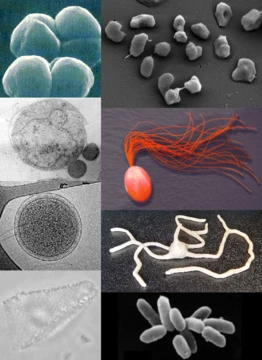
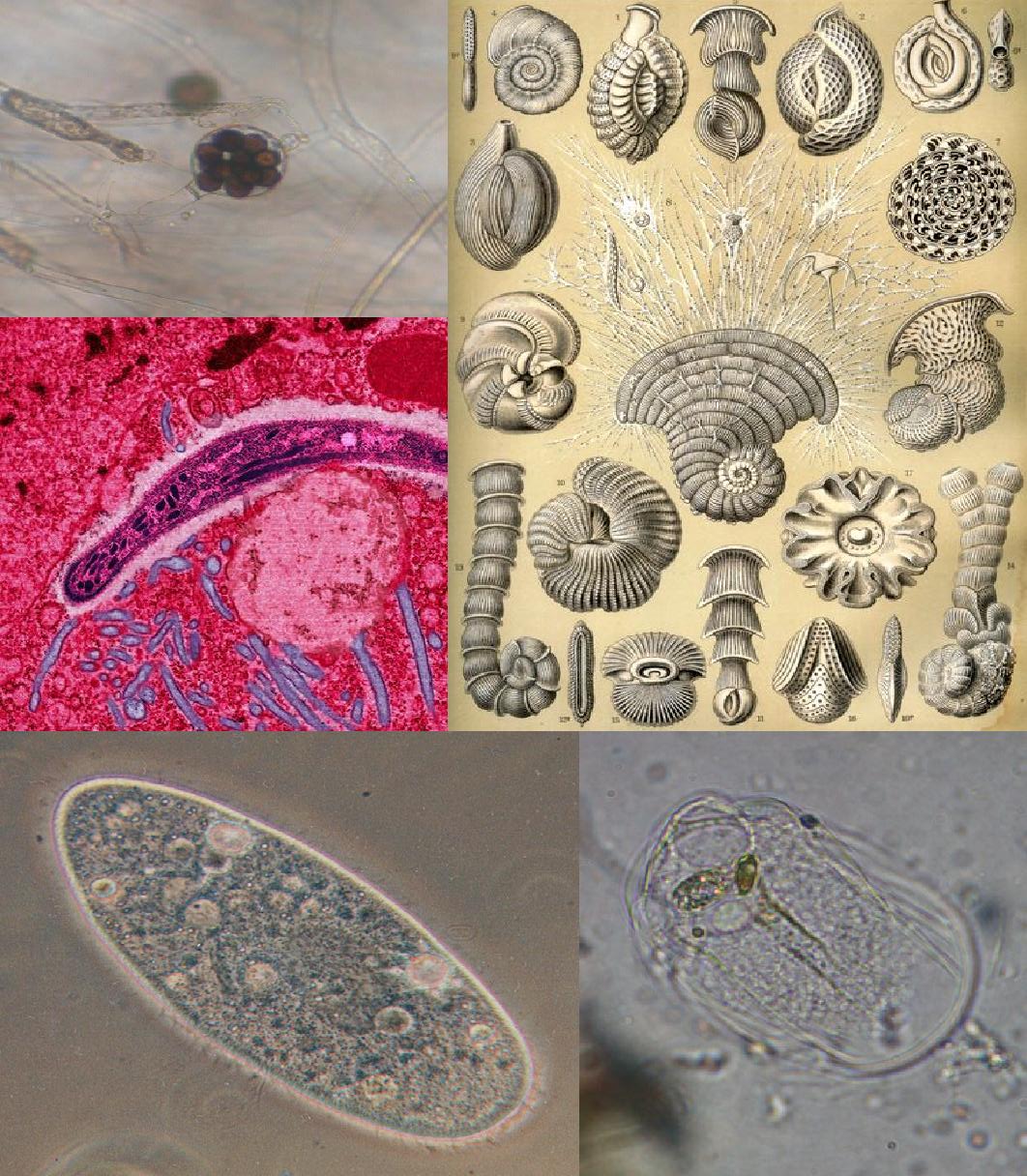
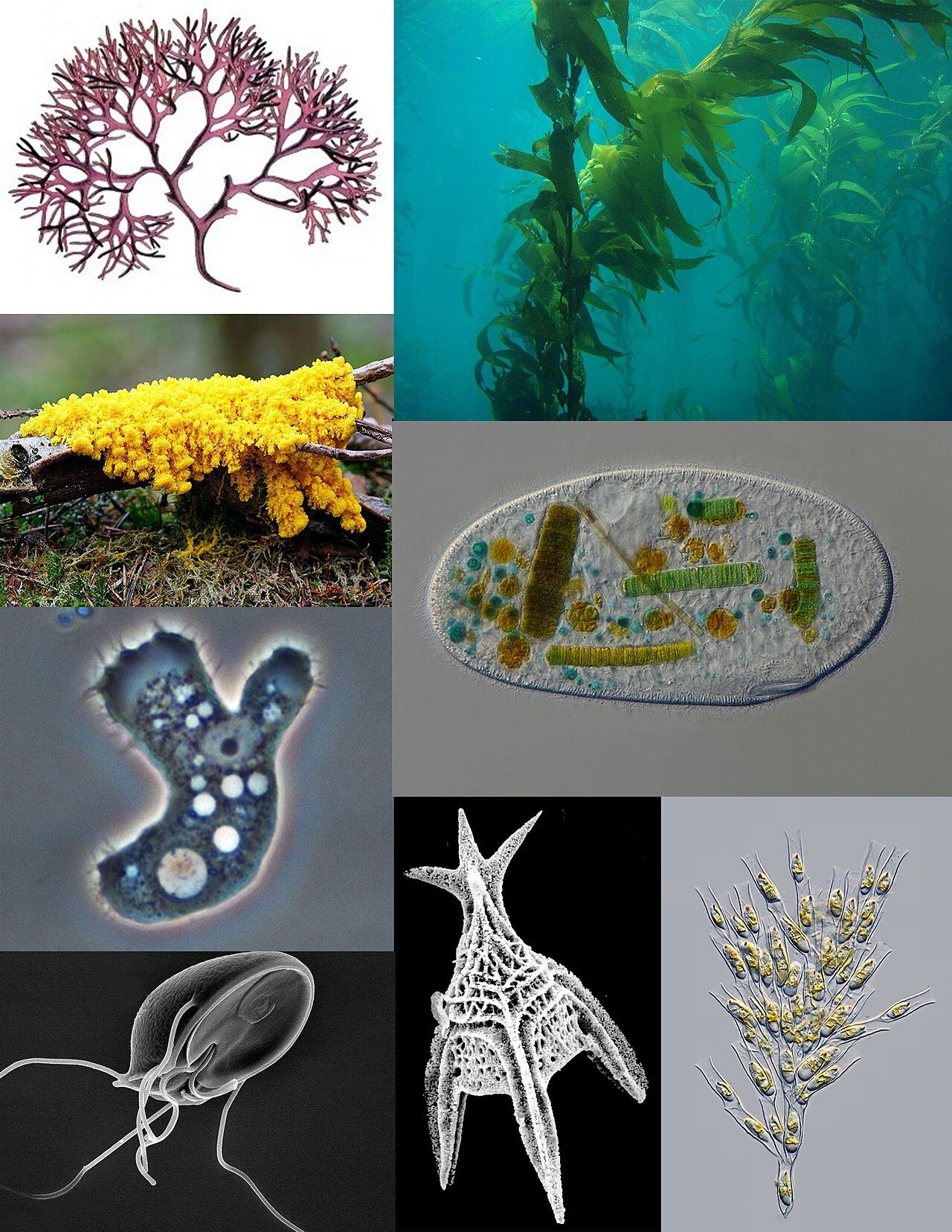
Respectively: Claire Fackler, CINMS, NOAA, User:Wiedehopf20 , Frank Fox, Patrick · CC BY-SA 4.0
Protists are a paraphyletic group of eukaryotic organisms that are not animals, land plants, or fungi. They encompass the entire eukaryote tree of life, from which the three traditional 'higher' kingdoms evolved. Protists are primarily single-celled but include various multicellular forms such as seaweeds and slime molds, and they exhibit a vast diversity of life cycles, nutritional modes, and cellular structures.
- field
- Biology, Protistology
- known_for
- Paraphyletic group encompassing all eukaryotes except animals, land plants, and fungi; major contributors to global primary production and biogeochemical cycles
- key_trait
- Primarily single-celled, with diverse forms including flagellates, amoebae, ciliates, and algae
Lore & Background
Protists were historically classified as a separate kingdom, Protista or Protoctista, or lumped into plant and animal kingdoms as algae and protozoa. With molecular phylogenetics and electron microscopy, many protists were found to be more closely related to animals or plants than to other protists, leading to major classification revisions. Modern classifications spread protists across several supergroups, including Archaeplastida, Opisthokonta, Amoebozoa, Rhizaria, Stramenopiles, Alveolata, and Excavata. The earliest diverging protist groups are still debated, and no single lineage is universally accepted as representing the ancestral traits of the last eukaryotic common ancestor (LECA).
Reader's Guide
Protists are significant because they compose the majority of eukaryotic diversity, as indicated by environmental DNA studies, despite having relatively few described species. They are abundant in all ecosystems, including extreme habitats, and play crucial roles in biogeochemical cycles and trophic webs. As producers, they are responsible for a large portion of global primary production and carbon fixation. As consumers and decomposers, they regulate fungal and bacterial populations and release nutrients. Some form mutualistic relationships with corals and termites, while others are important parasites causing diseases such as malaria, toxoplasmosis, clubroot, and potato blight. Free-living protists can also cause harmful algal blooms. Their early evolution corresponds with the evolution of eukaryotes, with a rapid diversification of modern supergroups after the last eukaryotic common ancestor (LECA).
Did You Know?
- Protists do not form a natural group or clade, but are a paraphyletic group from which land plants, animals, and fungi evolved.
- The earliest diverging protist groups are debated; no single lineage is universally accepted as representing the ancestral traits of the last eukaryotic common ancestor (LECA).
- Some protists, such as giant kelp and slime molds, have evolved complex multicellularity, though giant kelp lack true tissues and slime molds do not have differentiated tissues.
- Pathogenic protists cause well-known human diseases like malaria and toxoplasmosis, as well as plant diseases like clubroot. Potato blight is caused by the oomycete Phytophthora infestans, which is classified as a protis
The Definition That Defies Definition
Protists occupy a peculiar place in biological taxonomy: they are defined not by what they share, but by what they are not. Any eukaryotic organism that falls outside the three familiar kingdoms—animals, land plants, and fungi—gets swept into this catch-all category. Because of this exclusion-based logic, protists form a paraphyletic assemblage rather than a true clade, meaning they encompass the entire eukaryotic tree of life from which those three kingdoms ultimately branched off. No single characteristic unites every protist while excluding every non-protist. Before the era of genetic sequencing, the boundaries were especially murky. Organisms we now confidently call protists were scattered across the old plant and animal kingdoms as 'algae' and 'protozoa,' while some tiny animals like myxozoans and certain lower fungi were routinely tucked into the protist camp. Even red and green algae, now recognized as close relatives of land plants, were long lumped together with them. The result was a category so heterogeneous that it dwarfed the higher eukaryotes in sheer variety of life cycles, feeding strategies, locomotion methods, and cellular architecture.
The Supergroup Revolution
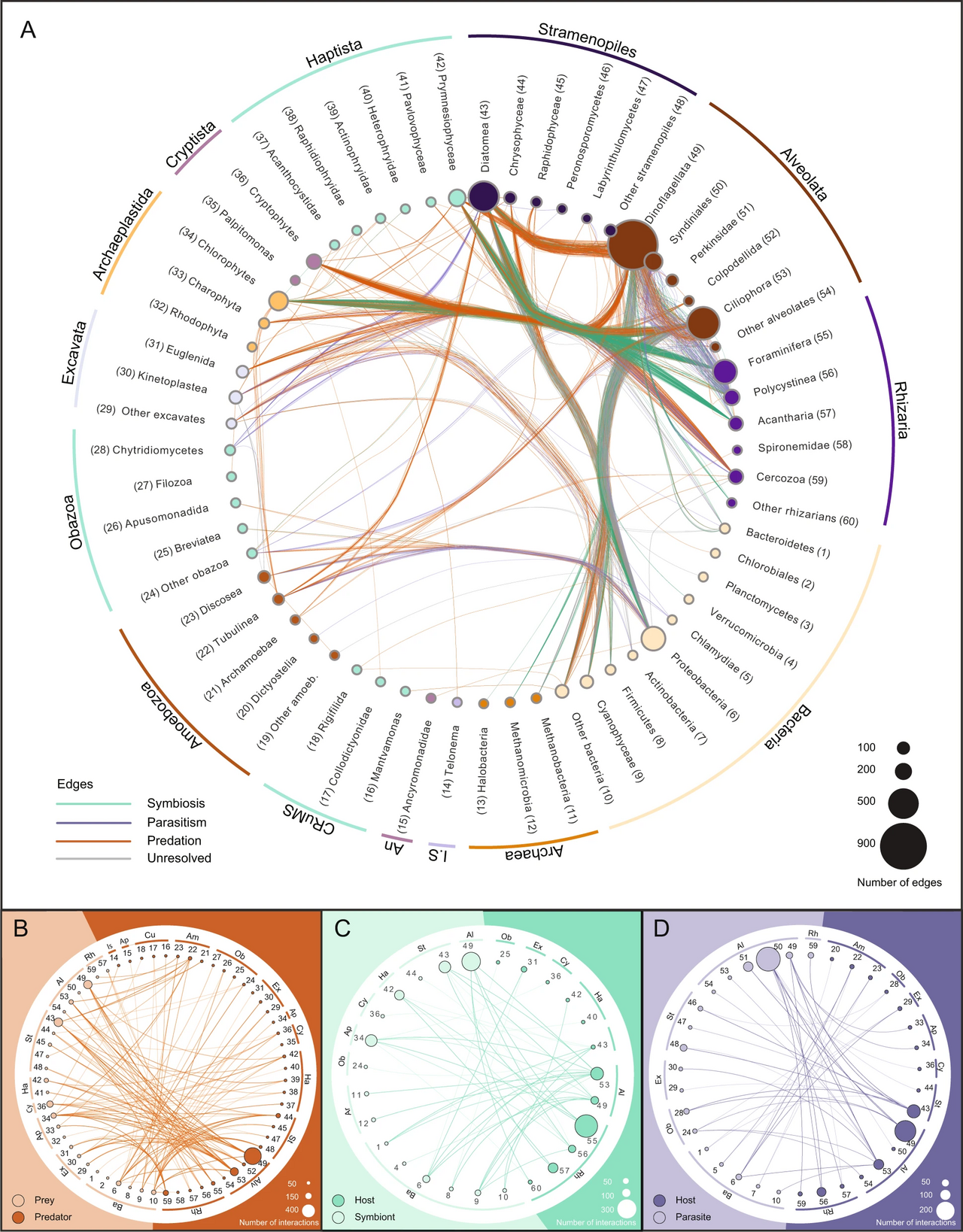
The old kingdom of Protista, once a tidy box for everything eukaryotic that wasn't a plant, animal, or fungus, shattered under the combined pressure of molecular phylogenetics and electron microscopy. Researchers discovered that organisms long grouped together as protists were actually closer kin to animals or plants than to one another, while seemingly unrelated forms turned out to share deep evolutionary ties. Algae, for instance, were found intermixed with protozoa in ways that defied the old two-camp view. Today, protists are distributed across several major clades called supergroups, each a mosaic of disparate forms. Archaeplastida houses the red and green algae from which land plants descended. Opisthokonta bundles fungi, animals, and their single-celled cousins. Amoebozoa and Rhizaria shelter most amoeboid organisms, including foraminifers and radiolarians. Stramenopiles and Alveolata contain a vast array of flagellates, many of which became major parasites or phototrophs. At the base, Excavata—euglenids, metamonads, and kin—preserve flagellar traits thought to reflect the last eukaryotic common ancestor. This rapid diversification unfolded over roughly three hundred million years after that ancestor appeared, yet the fossil record stayed sparse until the Neoproterozoic, when opisthokonts, amoebae, and multicellular algae finally left their first traces.
A Menagerie of Cellular Strategies
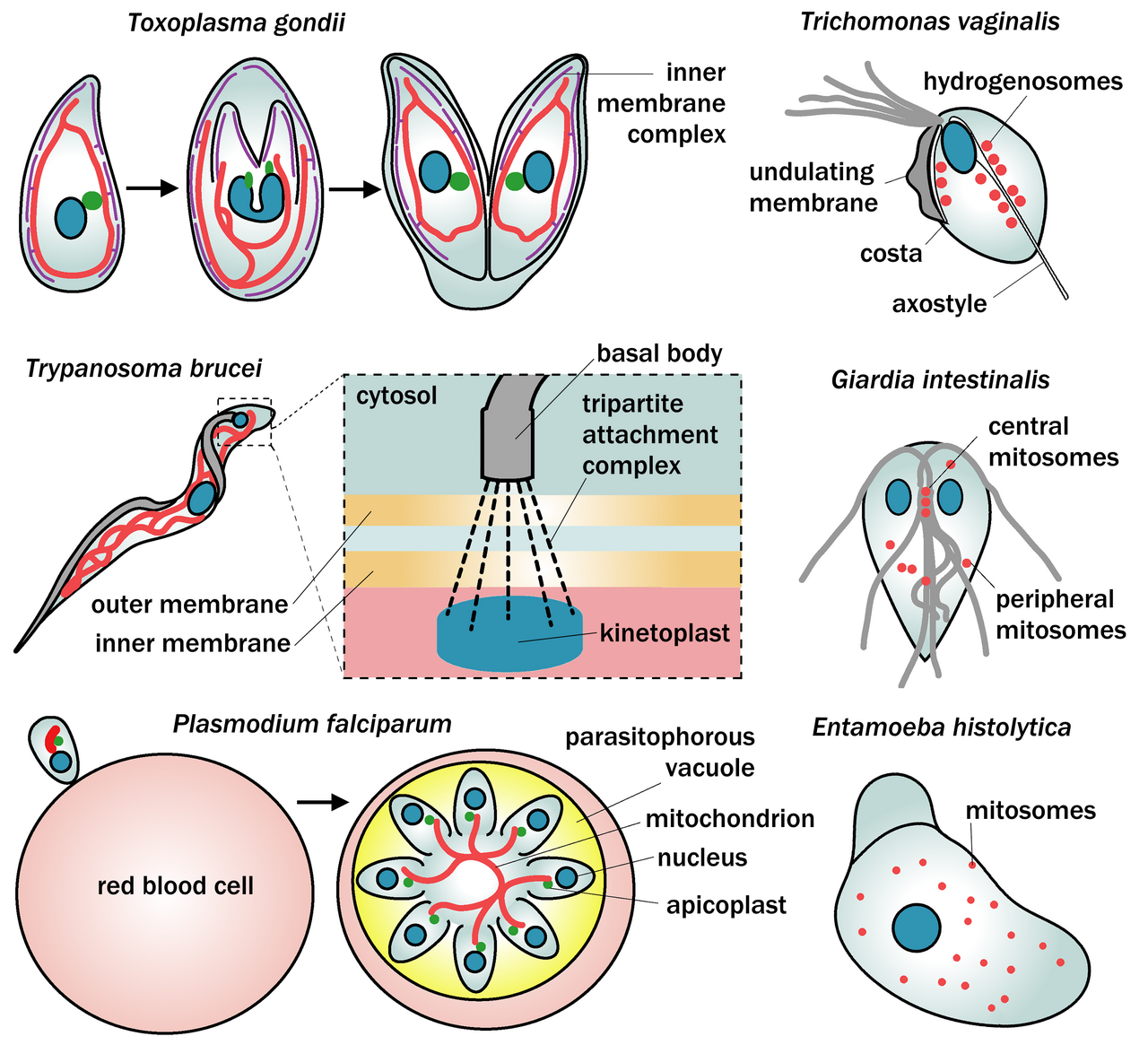
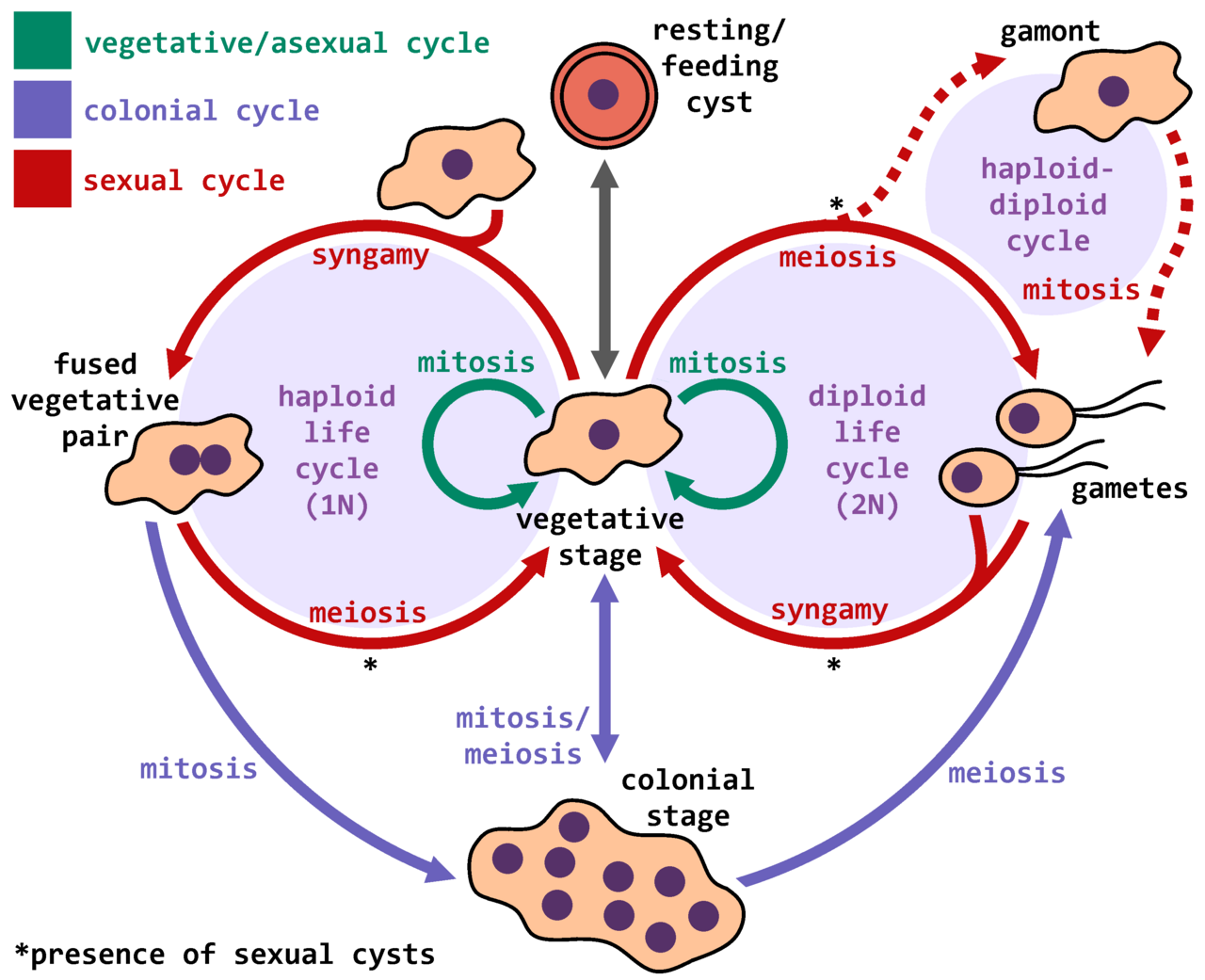
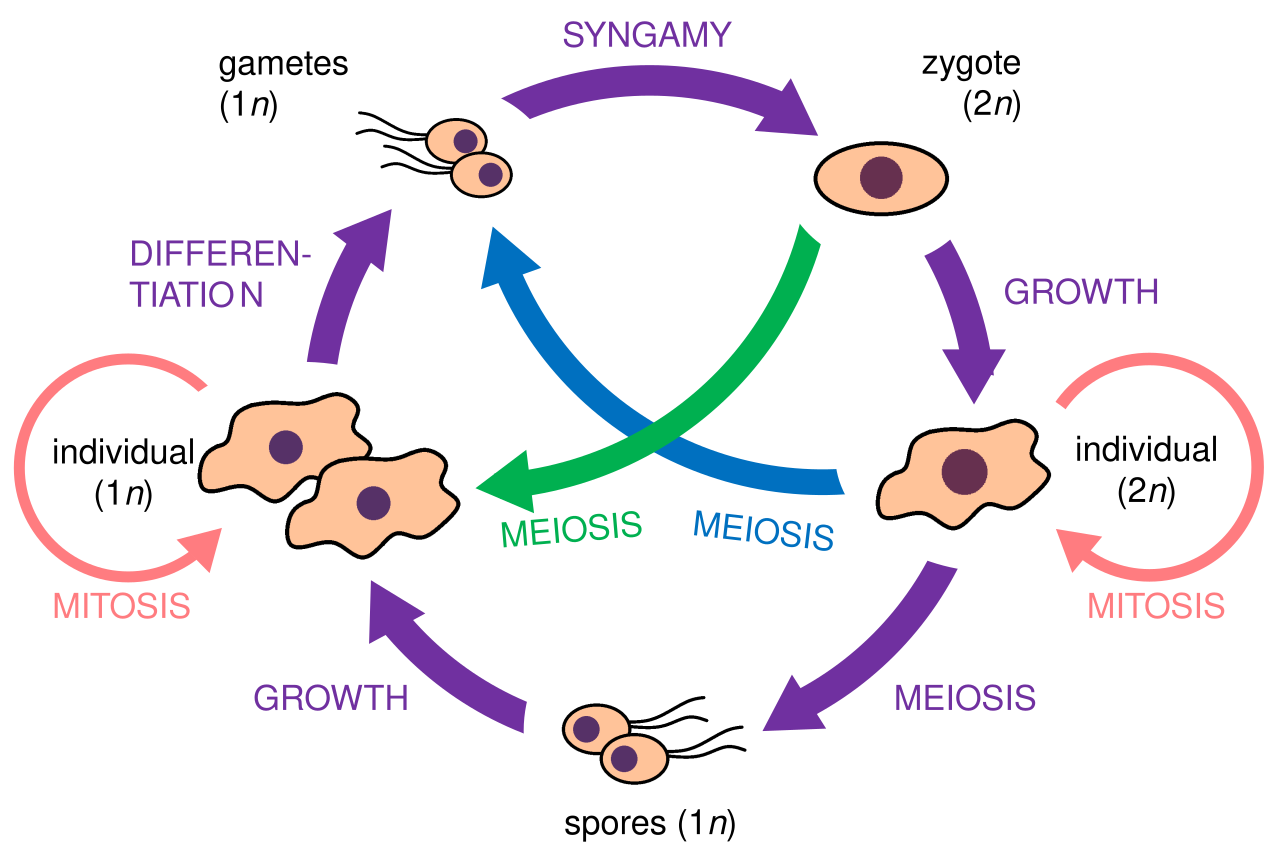
Few groups of organisms match protists for the sheer range of ways they have solved the basic problems of living. Nutrition alone spans an extraordinary spectrum: some protists engulf food particles (phagotrophy), others absorb dissolved nutrients (osmotrophy), some pierce neighboring cells to siphon out their contents (myzocytosis), and still others harvest sunlight through chloroplasts (phototrophy). Many blend two or more of these strategies simultaneously in what is called mixotrophy. Beneath the surface, nearly every protist cell is scaffolded by a complex cytoskeleton built around a flagellar apparatus with basal bodies from which microtubules radiate to support the rest of the structure. Beyond this conserved framework, protists have evolved a toolkit of specialized organelles: contractile vacuoles that pump excess water to maintain osmotic balance, eyespots that detect light direction, and mitochondria modified in ways that reshape their cellular respiration. They also routinely harbor symbiotic bacteria and archaea that help drive their metabolism. Perhaps most surprisingly, despite a long-standing assumption that protists reproduce only asexually, many are capable of sexual reproduction and can cycle through elaborate life stages involving distinct generations. Several independent transitions to multicellularity have produced colonies with alternating cell types, giant slime molds, and seaweeds with differentiated tissues.
Ecosystem Engines and Unseen Threats
Protists are everywhere and almost everything in the biological world. They inhabit every ecosystem on Earth, including extreme environments, and environmental DNA studies indicate they constitute the majority of eukaryotic diversity, even though the number of formally described species remains comparatively small. Most protist species have yet to be named. As primary producers, protists are responsible for a large share of global carbon fixation and primary production. As consumers and decomposers, they keep fungal and bacterial populations in check and recycle nutrients back into the food web. Some form mutualistic partnerships with corals and termites, while others serve as critical parasites. That parasitic role is not merely academic. Pathogenic protists are behind some of the most devastating diseases in human and animal history—malaria and toxoplasmosis among them—and cause major crop losses through plant diseases like clubroot and potato blight. Free-living protists can also turn destructive, triggering harmful algal blooms that devastate aquatic life. From the base of the ocean food chain to the inside of a human bloodstream, protists are quietly shaping the planet's biology at every trophic level.
Gallery
Frequently Asked Questions
What is a Protist?
A protist is any eukaryotic organism that does not fall into the animal, land-plant, or fungal kingdoms. It is a paraphyletic catch-all rather than a single clade, meaning it groups together lineages that lack a common ancestor exclusive to the group.
What forms do Protists take?
Most protists are single-celled, but the group also includes multicellular organisms such as various seaweeds and slime molds. Within that range you'll find flagellates, amoebae, ciliates, and many kinds of algae, each with distinct cellular architectures.
Why is Protist important to Earth's ecosystems?
Protists are among the largest contributors to global primary production, especially in marine and freshwater environments. They also drive key biogeochemical cycles by recycling carbon, nitrogen, and other essential elements through their diverse metabolic pathways.
How does Protist relate to the 'higher' kingdoms?
Animals, land plants, and fungi all evolved from within the broader eukaryote tree that protists occupy. In that sense, protists represent the deep ancestral and sister lineages from which those three familiar kingdoms branched off.
What nutritional strategies do Protists use?
Protists display an extraordinary range of feeding and energy-acquisition modes, spanning photosynthesis, phagocytosis, osmotrophy, and mixotrophy. Their life cycles can involve alternating motile and non-motile stages, sexual and asexual reproduction, and complex developmental sequences.
More in Microbial Groups And Extremophiles 1-17
Spotted an error? Know more?
This is a living reference — every entry is fact-audited, and reader corrections feed straight into our audit queue. Suggest an edit · See this site's audit record