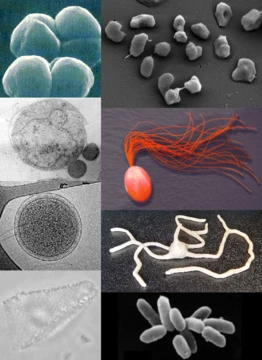
Protozoa
Polyphyletic group of single-celled eukaryotes, historically seen as first animals.

Pitelka, Dorothy R. (Dorothy Riggs), 1920- · No restrictions
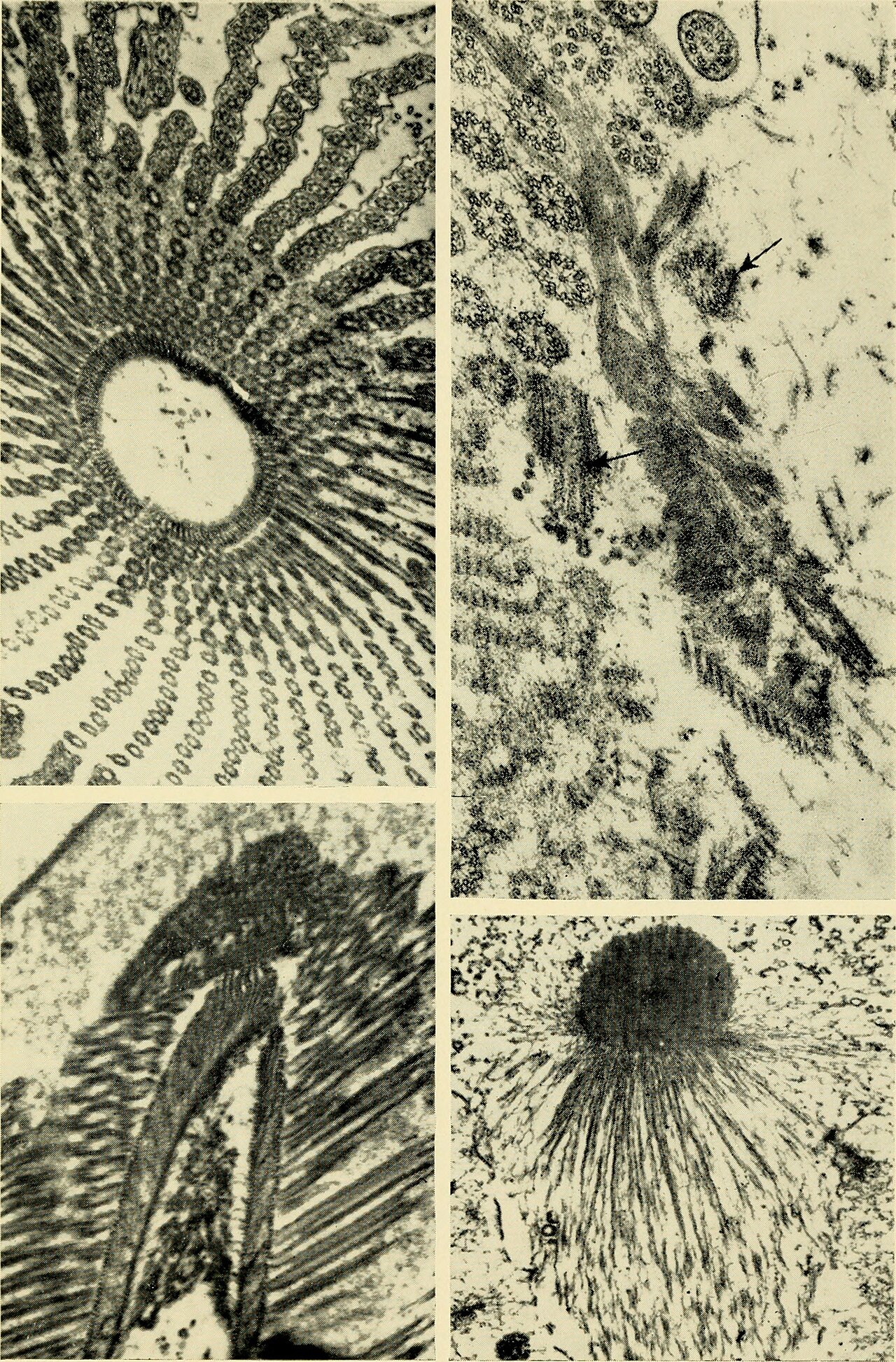
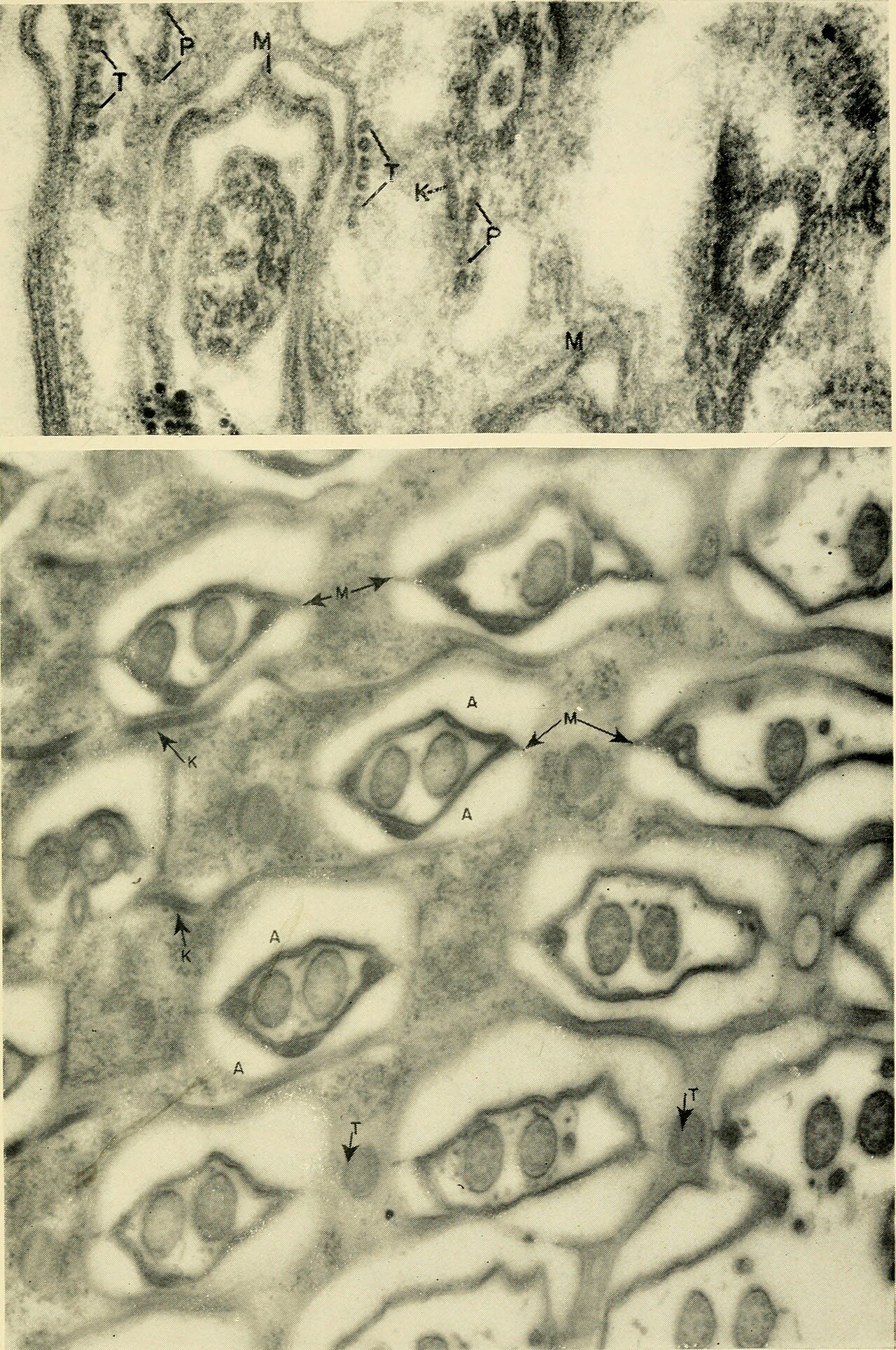
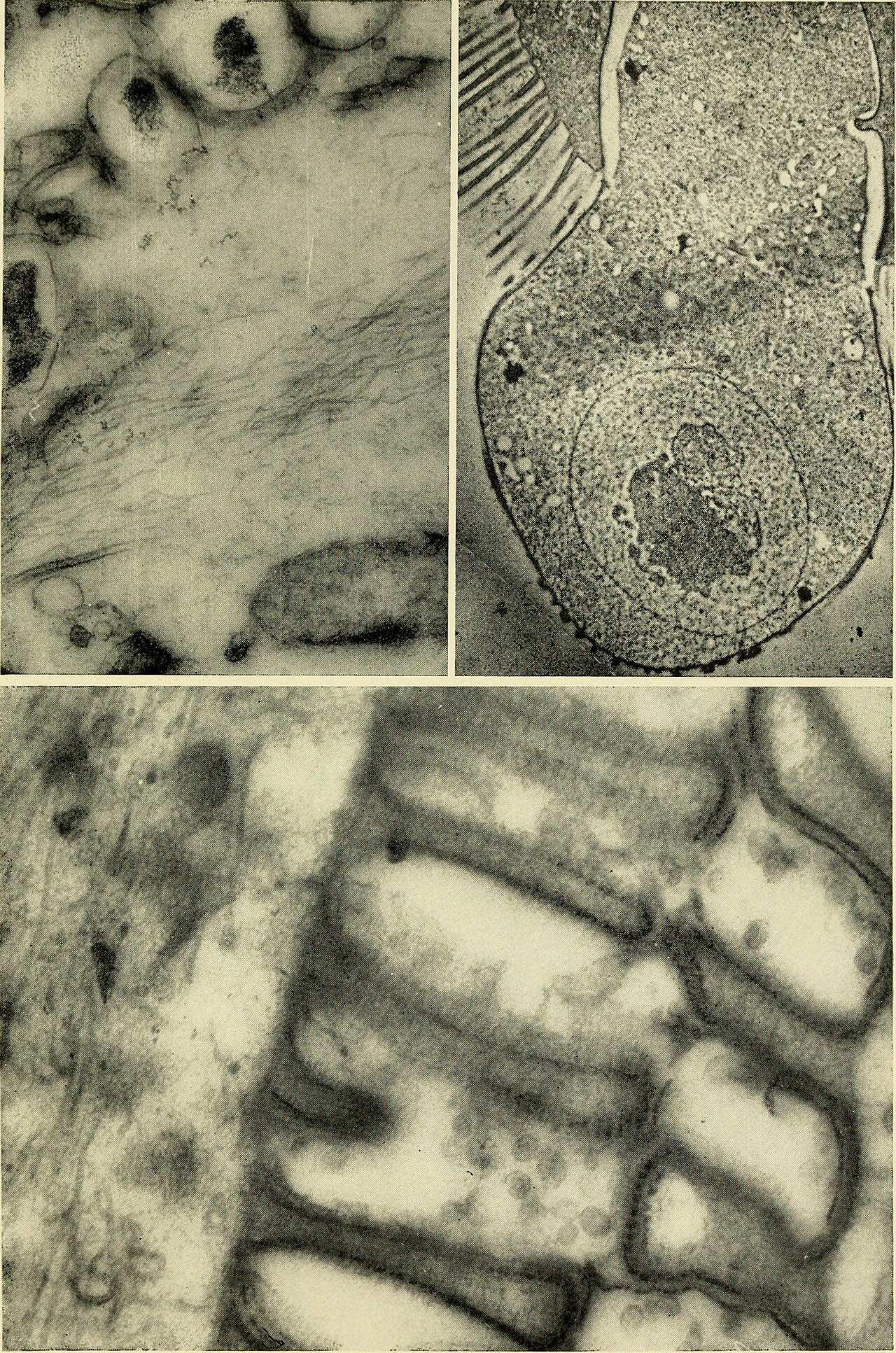
Protozoa are a polyphyletic group of single-celled eukaryotes, either free-living or parasitic, that feed on organic matter such as other microorganisms or organic debris. The classification remained widespread through the 19th and early 20th centuries, but by the 1970s, the taxon was recognized as failing monophyletic and holophyletic standards, and grouping protozoa with animals became no longer justifiable. The term continues to be used loosely to describe single-celled protists that feed by heterotrophy.
- coined_by
- Georg August Goldfuss
- original_rank
- Class within Animalia
- etymology
- Greek πρῶτος (first) + ζῷα (animals)
- traditional_examples
- Amoeba, Paramecium, Euglena, Trypanosoma
- modern_usage
- Loose term for heterotrophic single-celled protists
Lore & Background
T. von Siebold proposed that protozoa such as ciliates and amoebae consisted of single cells, redefining Protozoa to include only such unicellular forms and raising the group to the level of a phylum.
Reader's Guide
Protozoa hold significance as a historical taxonomic concept that shaped early biological classification, reflecting the struggle to categorize single-celled organisms within a two-kingdom framework. Although the group is now recognized as polyphyletic and not a natural clade, the term persists in loose usage for heterotrophic protists. The history of Protozoa illustrates key developments in biology: the impact of cell theory, the shift from two-kingdom to multi-kingdom systems, and the eventual adoption of monophyletic classification standards. The taxon's legacy includes its role in founding protozoology as a discipline, with traditional textbook examples like Amoeba and Paramecium remaining familiar. The ongoing use of 'Protozoa' with differing scopes highlights the challenges of taxonomic terminology and the need for disambiguation.
Did You Know?
- Traditional textbook examples of protozoa include Amoeba, Paramecium, Euglena, and Trypanosoma.
Ancient Whispers of the Invisible
The suspicion that invisible living things populate the world stretches back millennia before any lens confirmed them. In sixth-century BC India, Jain thinkers described tiny creatures called nigodas, born in clusters and dwelling inside plants, animals, and human bodies, with lifespans lasting only a fraction of a second. Mahavira, the twenty-fourth Jain preacher, taught that everyday human acts—eating, breathing, sitting, moving—destroyed these beings on a massive scale, a teaching many modern Jains regard as a prescient echo of later microbiology. The Roman writer Varro, in his first-century BC treatise On Agriculture, warned that minute creatures invisible to the eye floated in the air near swamps and entered the body through the mouth and nose, causing serious disease. None possessed a microscope, yet their intuitions anticipated the scientific confirmation that would not arrive for another century.
The Lens That Changed Everything
For centuries, the microbial world remained a matter of philosophical speculation until Antonie van Leeuwenhoek, working in the 1670s, used simple single-lensed microscopes of his own design to become the first person to observe and experimentally study microorganisms. His pioneering work secured his reputation as one of the founding figures of microbiology. Together, these two naturalists opened a window onto a realm of life entirely invisible to the unaided eye. Their observations set in motion a scientific revolution: within two centuries, the field they inaugurated would overturn long-held assumptions about the origins of life and the causes of disease. Even the organisms Leeuwenhoek first glimpsed, such as Euglena—photosynthetic like plants yet motile like animals—posed immediate taxonomic puzzles, forcing later scientists to rethink the neat division of life into just two kingdoms.
Pasteur, Koch, and the Death of Spontaneous Generation
The nineteenth century delivered the two most decisive blows to centuries of biological myth. In the 1850s, Louis Pasteur devised a now-famous series of experiments in which he boiled nutrient broths to kill any existing organisms, then exposed them to air either through a filter that blocked particles or through a curved tube that allowed air in while letting dust settle away from the liquid. In neither case did anything grow, proving that the living organisms appearing in unsealed broths came from outside—spores riding on dust—rather than arising spontaneously from the liquid itself. This elegant refutation of spontaneous generation simultaneously bolstered the emerging germ theory of disease. Two decades later, Robert Koch turned his attention to anthrax, demonstrating that the blood of infected cattle always contained large numbers of Bacillus anthracis. By injecting a small sample from a sick animal into a healthy one, and by culturing the bacteria in nutrient broth before re-injecting, Koch proved transmission and causation. From these experiments he formulated the criteria now known as Koch's postulates, a framework for linking a specific microorganism to a specific disease that, despite its limitations, remains a cornerstone of medical science.
Everywhere, Every Domain, Every Extreme
Microorganisms are not a single type of creature but a sprawling collection that spans all three domains of life. Bacteria and Archaea consist entirely of microbes, while the Eukaryota domain houses both every multicellular organism on Earth and a vast array of unicellular protists and protozoans, some of which are more closely related to animals and others to green plants. Their habitats are equally staggering: they thrive at the poles and the equator, in deserts, inside geysers, within rocks, and in the crushing depths of the open ocean. Some species have adapted to extreme heat or cold, others to immense pressure, and a few—Deinococcus radiodurans being a striking example—survive in environments saturated with radiation. Their ecological reach extends to the soil, where they are a vital component of fertility, and into the bodies of every multicellular organism, forming the microbiota that includes the essential human gut flora. The oldest direct evidence of life on Earth comes from 3.45-billion-year-old Australian rocks that once harbored microorganisms, a testament to how long these tiny beings have been the planet's dominant biological force.
Gallery
Frequently Asked Questions
What is Protozoa?
Protozoa is a loose, polyphyletic collection of single-celled eukaryotic organisms that are either free-living or parasitic. They are heterotrophic, meaning they obtain energy by consuming other microorganisms or decaying organic debris rather than making their own food.
What are Protozoa's key traits or 'powers'?
Protozoa are defined by their independent motility, their ability to hunt or scavenge organic matter, and the absence of a rigid cell wall. Well-known members that fans often cite include Amoeba, Paramecium, Euglena, and Trypanosoma.
How does Protozoa's taxonomic story end?
By the 1970s researchers had shown that the group does not trace back to a single common ancestor, so it fails both monophyletic and holophyletic standards. Today the name survives only as an informal shorthand for heterotrophic single-celled protists rather than a valid clade.
Why is Protozoa important in microbial ecology and medicine?
As grazers on bacteria and other microbes, protozoans help regulate population sizes and recycle nutrients through aquatic and soil food webs. They are also medically significant because members like Trypanosoma cause serious human diseases, linking the group directly to public-health concerns.
More in Microbial Groups And Extremophiles 1-17
Spotted an error? Know more?
This is a living reference — every entry is fact-audited, and reader corrections feed straight into our audit queue. Suggest an edit · See this site's audit record