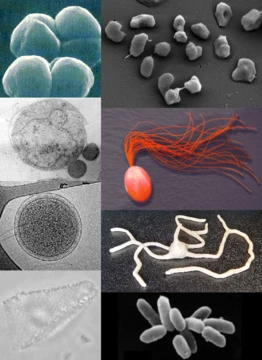
Red algae

Derek Keats · CC BY 2.0
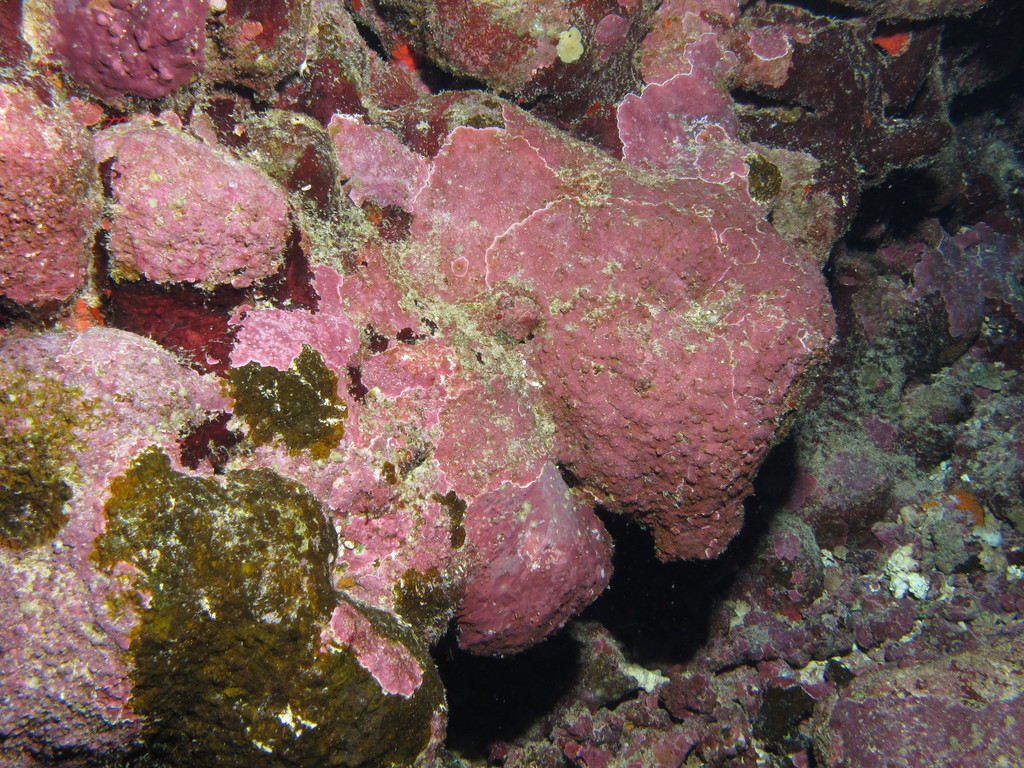
They are abundant in marine habitats, with about 5% of species occurring in freshwater environments, and include many notable seaweeds. Red algae are characterized by eukaryotic cells without flagella and centrioles, chloroplasts without external endoplasmic reticulum, and the use of phycobiliproteins as accessory pigments, which give them their red color. They play a major role in building coral reefs through coralline algae and are used in traditional cuisines and to produce agar, carrageenans, and other food additives.
- field
- Phycology
- known_for
- Oldest and largest phyla of eukaryotic algae; source of agar and carrageenans; coralline algae build coral reefs
Lore & Background
Red algae form a distinct group with double cell walls; the outer layers contain agarose and agaropectin, which can be extracted as agar by boiling, while internal walls are mostly cellulose. They have the most gene-rich plastid genomes known. Their chloroplasts contain evenly spaced, ungrouped thylakoids and pigments including chlorophyll a, α- and β-carotene, lutein, and zeaxanthin. The water-soluble pigments phycobilins, localized into phycobilisomes, give red algae their distinctive color, though they can vary from bright green to almost black at greater depths. Red algae reproduce sexually and asexually, with a life history typically involving alternation of generations that may have three generations rather than two. They lack motile sperm, relying on water currents and animals such as the isopod Idotea balthica for gamete dispersal. Pit connections and pit plugs are unique features formed during cytokinesis, with primary and secondary pit connections linking cells. The polyamine spermine triggers carpospore production after fertilization. Red algae store sugars as floridean starch, a type of starch consisting of highly branched amylopectin without amylose, deposited freely in the cytoplasm. Their major photosynthetic products include floridoside, D‐isofloridoside, digeneaside, mannitol, sorbitol, and dulcitol. Environmental conditions such as pH, salinity, light intensity, and nutrient limitation alter the concentration of these products.
Reader's Guide
Their ecological importance is highlighted by coralline algae, which secrete calcium carbonate and play a major role in building coral reefs. Economically, red algae such as Palmaria palmata (dulse) and Porphyra species (laver/nori/gim) are traditional foods in European and Asian cuisines, and they are used to produce agar, carrageenans, and other food additives. Their unique cell structure—including double cell walls, pit connections, and the absence of flagella and centrioles—distinguishes them from other algae. The presence of phycobiliproteins gives them their characteristic red color, though they can appear in various hues. Their reproductive cycle, which may involve three generations, and their reliance on water currents and animals for fertilization, illustrate their evolutionary adaptations. The loss of about 25% of core genes in their last common ancestor may explain their limited presence in freshwater environments. Overall, red algae contribute to marine ecosystems, human nutrition, and industrial products.
Did You Know?
- Red algae can vary in color from bright green to almost black at greater depths, despite being called red algae due to phycobiliproteins.
- Red algae store sugars as floridean starch, a type of starch consisting of highly branched amylopectin without amylose.
- The isopod Idotea balthica was the first animal discovered to help with the dispersal and fertilization of red algae gametes.
- Red algae have the most gene-rich plastid genomes known.
Taxonomic Breadth and Evolutionary Heritage
Only about five percent of red algal species inhabit freshwater, with those freshwater populations clustering in warmer regions. Researchers have proposed that this limited freshwater representation traces back to an evolutionary bottleneck: the last common ancestor of the lineage apparently shed roughly a quarter of its core genes along with much of its capacity for evolutionary adaptation, effectively narrowing the ecological range available to its descendants. The name Rhodophyta itself draws on Ancient Greek roots—rhódon meaning 'rose' and phutón meaning 'plant'—a nod to the reddish hues that characterize many members of this vast and ancient phylum.
Distinctive Cell Architecture and Pigmentation
At the cellular level, red algae stand apart from virtually all other eukaryotes. Throughout their entire life cycle they lack both flagella and centrioles, a feature that sets them apart from green algae and most other protists. Their chloroplasts are enclosed by a double membrane, contain evenly spaced but ungrouped thylakoids without grana, and carry phycobilisomes—granular assemblies of water-soluble phycobilin pigments such as phycoerythrobilin and phycocyanobilin—on the stromal surface. These phycobiliproteins are the source of the group's namesake red coloration, though individual species can appear bright green, soft pink, brownish, purple, or nearly black in deep water. Red algal cells also possess double walls: outer layers rich in agarose and agaropectin, and inner layers composed largely of cellulose. Perhaps most remarkably, red algae harbor the most gene-rich plastid genomes known to science, a trait that underscores their long and complex evolutionary trajectory.
Reproductive Strategies and Life-Cycle Complexity
Red algae reproduce through both sexual and asexual pathways, and their life histories often display an alternation of generations that can involve three distinct phases rather than the two seen in many other organisms. Because red algal sperm are non-motile, fertilization depends heavily on external agents: water currents carry spermatia toward the elongated trichogyne of the female reproductive organ, and in at least one documented case, the isopod Idotea balthica assists in dispersing and delivering gametes. The trichogyne continues to extend until it meets a spermatium, after which the cell wall at its base restructures to seal the fertilized cell. Asexual reproduction proceeds via spore production, fragmentation, simple cell division, or the release of propagules. Environmental cues such as day length can trigger the onset of the reproductive cycle. A unique structural hallmark of red algal development is the pit connection: during incomplete cytokinesis, a small pore remains between daughter cells, later sealed by a granular protein plug, creating a distinctive intercellular architecture found nowhere else in the algal world.
Ecological Roles and Culinary Heritage
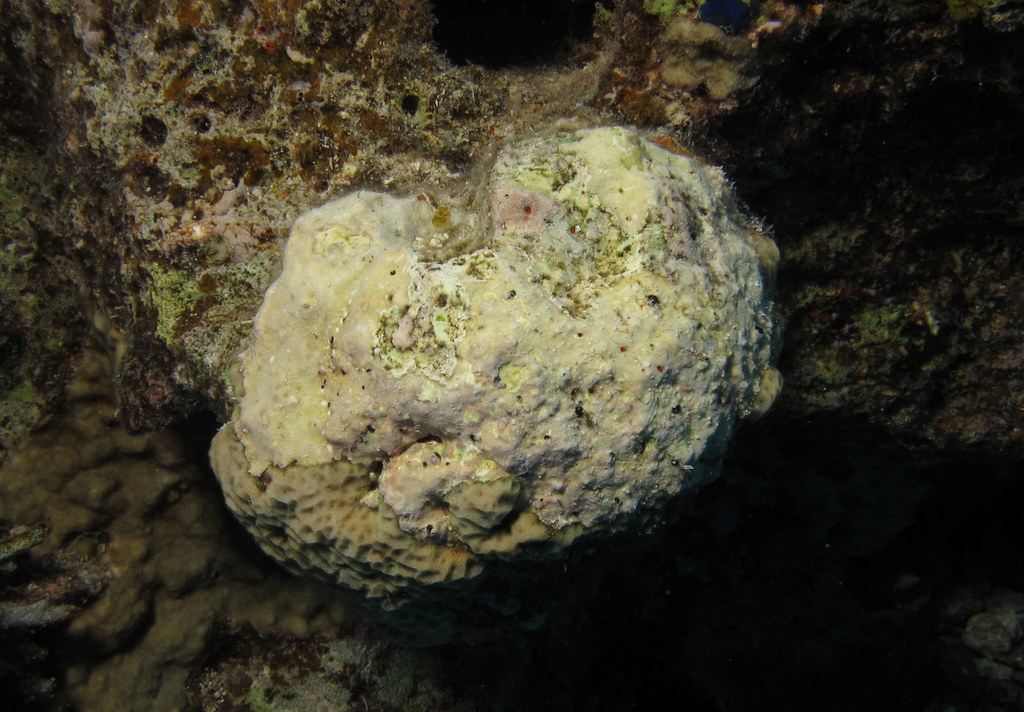
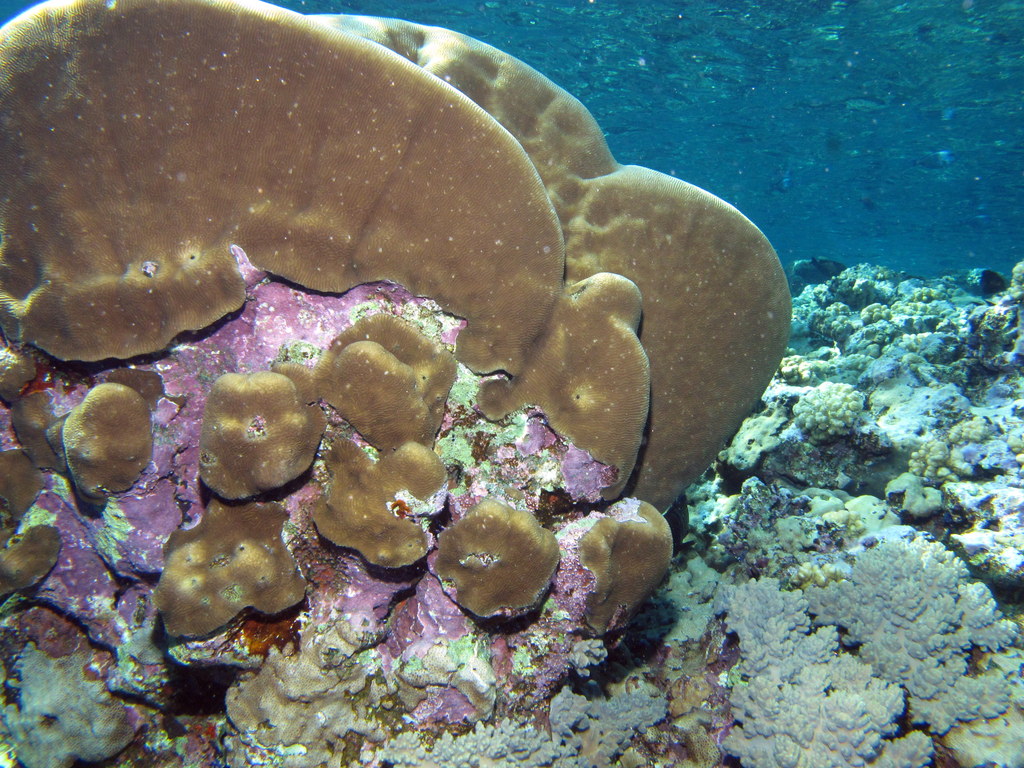
Beyond their biological distinctiveness, red algae play indispensable roles in marine ecosystems and human food systems. Coralline algae, a subgroup that secretes calcium carbonate, are major contributors to the construction and stabilization of coral reefs, providing the structural skeleton upon which entire reef communities depend. In the kitchen, species such as Palmaria palmata (dulse) and various Porphyra species (laver, nori, gim) have been staples of European and Asian cuisines for centuries. The polysaccharides agarose and agaropectin extracted from red algal cell walls yield agar, while carrageenans and other derivatives serve as widely used food additives and thickeners. Red algae also store their photosynthetic products as floridean starch—a highly branched amylopectin lacking amylose—deposited freely in the cytoplasm rather than within the chloroplast, a storage strategy unlike that of green algae. Their metabolic outputs, including floridoside, mannitol, and sorbitol, shift in concentration in response to changes in salinity, light, pH, and nutrient availability, reflecting a remarkable sensitivity to their surrounding environment.
Gallery
Frequently Asked Questions
What makes Red algae structurally unique among algae?
Their cells lack flagella and centrioles entirely, and their chloroplasts sit without an outer endoplasmic-reticulum membrane. They also depend on phycobiliproteins as accessory pigments rather than the carotenoids typical of green algae, which is what produces their signature red coloration.
How do Red algae contribute to coral reef ecosystems?
Coralline algae, a prominent subgroup within Rhodophyta, secrete calcium carbonate that cements and stabilizes the skeletal framework of coral reefs. They are therefore keystone structural organisms without which many reef architectures would collapse.
Why are Red algae important to human industries?
They are the primary natural source of agar and carrageenans, two polysaccharides indispensable in food processing, pharmaceuticals, and laboratory culture media. Their ecological role in reef construction also underpins the biodiversity of entire marine communities.
More in Microbial Groups And Extremophiles 1-17
Spotted an error? Know more?
This is a living reference — every entry is fact-audited, and reader corrections feed straight into our audit queue. Suggest an edit · See this site's audit record