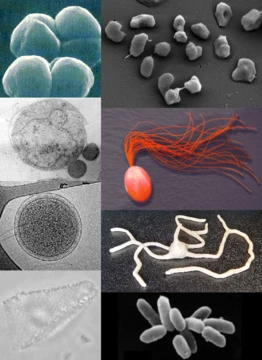
Thermoplasma
Acid- and heat-tolerant archaea with a unique wall-less membrane.

Thermoplasma is a genus of archaeans belonging to the class Thermoplasmata, which thrive in acidic and high-temperature environments. These organisms are facultative anaerobes and respire using sulfur and organic carbon. They lack a cell wall and instead possess a unique membrane composed mainly of a tetraether lipoglycan, which is presumably responsible for their acid and thermal stability.
- field
- Archaeology
- known_for
- Acid and thermal stability via unique tetraether lipoglycan membrane
- class
- Thermoplasmata
- metabolism
- Facultative anaerobe, respires sulfur and organic carbon
- cell wall
- Absent; membrane contains tetraether lipoglycan
Lore & Background
Thermoplasma species are archaeans that inhabit extremely acidic and hot environments, such as coal refuse piles. They are facultative anaerobes, meaning they can survive with or without oxygen, and they obtain energy by respiring sulfur and organic carbon. Unlike most organisms, Thermoplasma cells lack a cell wall; their structural integrity comes from a specialized membrane composed mainly of a tetraether lipoglycan. This lipoglycan consists of an atypical archaeal tetraether lipid attached to an oligosaccharide containing glucose and mannose, and it is thought to confer resistance to both acid and high temperatures.
Reader's Guide
Thermoplasma is significant as a model for understanding life at the extremes of acidity and temperature. Its lack of a cell wall and reliance on a unique tetraether lipoglycan membrane challenge traditional views of cellular structure and stability. The genus has been studied in genomic and biochemical contexts, including the sequencing of Thermoplasma acidophilum, which revealed insights into thermoacidophilic adaptation. Research on Thermoplasma also contributes to knowledge of archaeal lipid biochemistry and the evolution of membrane architecture. Its ability to thrive in harsh conditions makes it relevant to astrobiology and industrial applications involving extreme environments.
Did You Know?
- Thermoplasma belongs to the class Thermoplasmata, which thrive in acidic and high-temperature environments.
- Thermoplasma are facultative anaerobes that respire using sulfur and organic carbon.
- Thermoplasma lack a cell wall and instead have a membrane composed mainly of a tetraether lipoglycan.
- The tetraether lipoglycan contains an atypical archaeal tetraether lipid attached to a glucose- and mannose-containing oligosaccharide.
Frequently Asked Questions
Who is Thermoplasma?
Thermoplasma is a genus of archaea placed in the class Thermoplasmata, best known for thriving in environments that are simultaneously hot and highly acidic. They are a wall-less group that relies on a specialized membrane rather than a rigid outer shell to stay intact.
What are Thermoplasma's signature abilities?
Their standout trait is a cell membrane built around a tetraether lipoglycan, a molecular structure that lets them hold together under conditions that would destroy most other cells. This wall-less design is what grants them their remarkable resistance to both extreme heat and low pH.
How does Thermoplasma get its energy?
As a facultative anaerobe, Thermoplasma can switch between using oxygen and going without it, drawing energy by respiring sulfur compounds and organic carbon sources. This metabolic flexibility helps them persist in the hot, acidic niches they favor.
What makes Thermoplasma different from typical bacteria?
Unlike bacteria, Thermoplasma belongs to the domain Archaea and completely lacks a peptidoglycan cell wall. Instead, its outer boundary is a single membrane rich in tetraether lipoglycan, a molecular architecture with no direct bacterial equivalent.
Why do researchers and fans care about Thermoplasma?
Thermoplasma serves as a key model for understanding how life can function without a conventional cell wall while still withstanding harsh conditions. Its unique membrane biochemistry has also opened up questions about early Earth environments and the outer limits of cellular life.
More in Microbial Groups And Extremophiles 1-17
Spotted an error? Know more?
This is a living reference — every entry is fact-audited, and reader corrections feed straight into our audit queue. Suggest an edit · See this site's audit record